French Literature Reviews - 2026
The Figures of Irony in Marcel Proust's In Search of Lost Time
Literary Theory, Linguistics and Stylistics
Niogret, P. The Figures of Irony in Marcel Proust's In Search of Lost Time. HARMATTAN (EDITIONS L') Series: LITERARY APPROACHES. ISBN: 2-7475-5870-3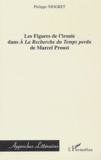
Abstract
Direct expression is not always the best way to communicate our thoughts, which is why we so often turn to irony. According to the traditional definition dating back to antiquity, irony consists of saying the opposite of what one thinks with the intent to mock. Its purpose is not to deceive, but rather to enhance our understanding. However, this definition fails to account for all the phenomena we perceive as ironic, prompting modern linguists to revise and expand upon it. Drawing on the numerous examples provided by Proust in In Search of Lost Time, this essay aims to illustrate these various definitions and demonstrate the diverse forms that irony can take. The cited examples will allow readers to discover that, contrary to popular belief, far from being tedious, Proust's work offers plenty of moments of genuine amusement.
Biography
Born in Lyon in 1934, Philippe Niogret returned to literary studies after a career as a computer engineer. In 2001, he successfully defended his doctoral dissertation in Modern Literature at Paris-Sorbonne University (Paris IV) on the journal *Europe* and French novels of the interwar period.
(information provided by the publisher)
Irony has long been a central concern in rhetoric and literary studies, evolving from the classical definition of saying the opposite of what is meant to a more complex linguistic framework. In In Search of Lost Time, irony is not merely a tool for mockery or deception, but a method to enhance understanding. This study draws on examples from the novel to illustrate the diverse forms that irony can take, exploring how indirect expression allows for a more nuanced communication of thought than direct statement alone.
The study examines how irony functions within the narrative structure of the novel, challenging the perception of the work as purely somber. By cataloging the various forms irony takes, the text highlights moments of amusement embedded in the prose. Readers interested in the intersection of linguistics and narrative style may find this examination of Proustian irony relevant.